| |
| Thursday, 12 November 2026 |
| The Men Who Made Menswear |
| Russell Nash |
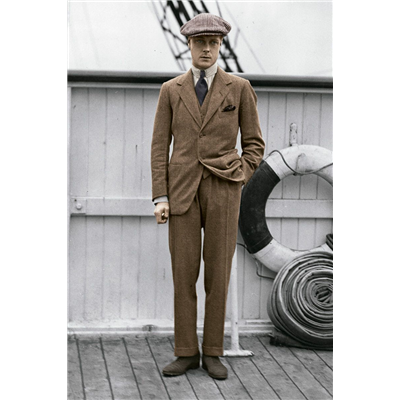 |
This talk tells the story of men's tailoring over the past 200 years, told through the lives of the men who commissioned, created and wore it. Tailors, shirtmaker, hatters and other craftspeople in London’s west end, especially around Savile Row & Jermyn Street have shaped the way men dress since the Regency. How did men such as Beau Brummell, The Duke of Windsor, Tommy Nutter, Montague Burton, Alexander McQueen and John Stephen create their signature looks which influenced the mens fashion? This lecture also looks at the wider cultural shifts since the early 19th century to the present day and how they affected the way that men present themselves.
Russell Nash trained and worked as an actor, puppeteer and theatre maker for 15 years. He also spent time as a journalist, jewellery business owner and writer. In 2015 he qualified a London Blue Badge Tourist Guide. Around this time he rekindled his love of art and art history. He now regularly guides the major art galleries and museums in London including the National Gallery, National Portrait Gallery, Tates Modern & Britain and the British Museum. He has delivered lectures for institutes and museums, as well as numerous U3A groups and other societies.
Our lectures start at 8pm. Bar opens at 7pm. Please invite your friends as we are waiving the Guest Fee for this Talk! |
|
| Thursday, 14 January 2027 |
| Re-imagining the Nation: Nineteenth Century Danish Landscape |
| James Vaux |
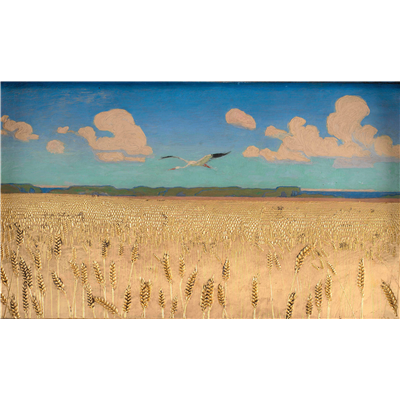 |
In the 19th century, Denmark lost power and territory but produced its finest art. This lecture examines how Danes used landscape art to re-imagine their new, smaller country. It charts its rise as a major genre, featuring paintings from Denmark's Golden Age to those of its famous Skagen School. It looks at how new motifs and styles were introduced over the century and considers new ways of interpreting landscapes. For those unfamiliar with Danish artists, prepare for a revelation, and understand why London’s National Gallery is so keen to collect their works.
James Vaux is a researcher and lecturer specialising in Nordic arts, culture, design and history. For the past two years he has been travelling across the Nordics, visiting and researching the homes and colonies of artists, writers, designers and musicians to provide first hand insights into their lives and works. James took a law degree at Oxford with First Class Honours and qualified as a solicitor before switching career. As a managing director of the international bank Rothschild & Co, he set up and ran the bank’s Nordic operations, living and working in Scandinavia and immersing himself in the countries’ arts, culture and history. James then gained an MA (Distinction) at UCL in Scandinavian Studies. He studied interior design and art history at the Inchbald School, Mid-Century Modern at Sotheby’s Institute and electronic music at Point Blank. He has also been a DJ, promoter, record label owner, hosted a local radio show for four years and ran a community cinema. He is now a popular lecturer on Nordic arts and design - as well as abstract expressionism. His focus is on placing works in their historical context and sharing inside knowledge from his extensive research trips and visits to artists' homes and colonies across the Nordics.
Our lectures start at 8pm. Bar opens at 7pm. Non-members welcome - £15 on the door |
|
| Thursday, 11 February 2027 |
| The Architecture of Optimism: Building Health & Happiness Between the Wars |
| Tessa Boase |
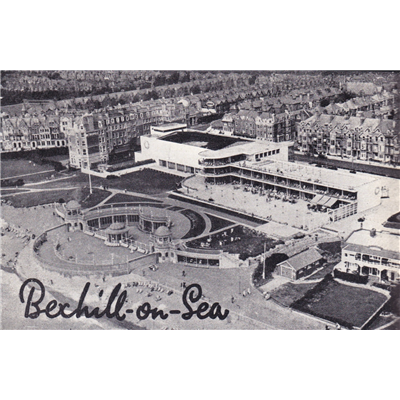 |
Lidos and libraries, concert halls and cottage estates: the inter-war era was a time of bold and urgent experiments in social engineering through architecture. Against a backdrop of the Great Depression, ‘moral uplift’ and ‘optimism’ became the buzzwords of the day. What if civic architecture could change the lives of the people? How could the puny ‘C3’ Brits be transformed into an A1 nation? What could we learn from our European neighbours (including, whisper it, the Germans)? This fascinating talk celebrates those who – all too briefly – dared to dream bigger and better. It brings vividly to life their battles and triumphs, from the lavish Bermondsey bath house to Manchester's Wythenshawe estate; from the lido built by Guildford’s unemployed, to Bexhill's De La Warr Pavilion, designed by a German Jewish escapee. An uplifting new talk, with great resonance for today.
Tessa Boase is a freelance journalist, author, lecturer and campaigner with a particular interest in uncovering the stories of invisible women from the 19th and early 20th-centuries – revealing how they drove industry, propped up society and influenced politics. She’s the author of three books of social history: The Housekeeper’s Tale: The Women Who Really Ran the English Country House; Etta Lemon: The Woman Who Saved the Birds, and London’s Lost Department Stores: A Vanished World of Dazzle and Dreams. Since uncovering the feminist origins of the RSPB, Tessa has been campaigning for public recognition of its female founders with plaques, portraits and a statue.
Our lectures start at 8pm. Bar opens at 7pm. Non-members welcome - £15 on the door |
|
| Thursday, 11 March 2027 |
| Ljubljana & Slovene Singularity |
| Gavin Plumley |
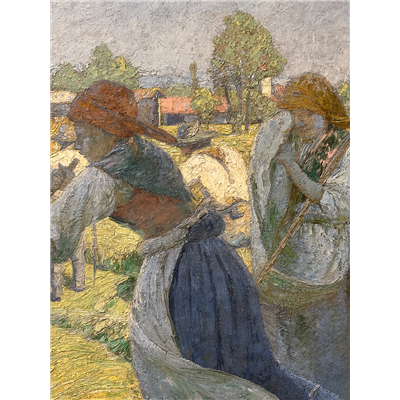 |
Situated between the Austrian Alps and the Balkans, Slovenia was subject to opposing political forces during the 19th and early 20th centuries. Crucially, however, many of its cultural figures sought to express an individual brand of nationalism. Artists such as Rihard Jakopič and Ivan Grohar formulated a local type of impressionism, celebrating the Slovene landscape, while architects Jože Plečnik and Ivan Vurnik reimagined the country’s capital, Ljubljana, creating one of the most unified urban design projects in Central Europe. This talk looks at their efforts within the context of the history of Slovenia.
A writer and broadcaster. Appears on BBC Radio 3 and 4, and contributes to newspapers, magazines and opera and concert programmes worldwide. Lectures widely about the culture of Central Europe. Recent appearances include Klimt and The Kiss in cinemas worldwide, and talks for the Hay and Cheltenham Literature Festivals, the Royal Opera House, the National Gallery, the National Trust, the National Theatre, the British Museum and the V&A. His first book, A Home for All Seasons, was published in 2022; his second, The Gay Apocalypse: Queer Life and Culture in Vienna 1900 will be released next year.
Our lectures start at 8pm. Bar opens at 7pm. Non-members welcome - £15 on the door |
|
| Thursday, 08 April 2027 |
| Veronese's' Last Supper': No-Body expects the Venetian Inquisition |
| Sarah Jaffray |
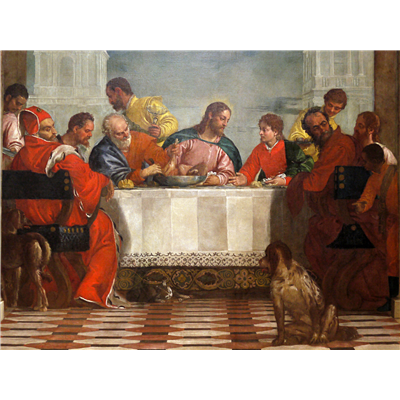 |
Soon after Paolo Veronese's Last Supper (1573) was installed in the Basilica dei Santi Giovanni e Paolo, the artist was called in front of the Holy Venetian Inquisition, supposedly for the 'liberties' taken with its subject. This talk is interested in those liberties and what they reveal about Veronese's contemporary Venice. We'll get to know late 16th century cosmopolitan Venice through Veronese's interpretation. But, we also look at the politics of the time: why did the Inquisition really descend upon the artist? What about the artist's cosmopolitan view troubled the 'powers that be'?
Sarah is an art historian, educator, curator and writer based in London. Before her current position as head of art history at City Lit, London's largest adult education college, Sarah was a curator in the Department of Prints and Drawings at the British Museum. For six years, she was the lead educator for the Bridget Riley Art Foundation and has also worked at Wellcome Collection exploring the connections of art, medicine and human experience. Prior to relocating to London for family, she was as a tenured professor of Art History based in Los Angeles. Sarah has been an art history lecturer since 2003. Her first MA in Art History focused on the links between poetry and painting in late 19th century France while her second MA in Cultural Studies focused on photography and political protest. Sarah lectures on a variety of topics and prefers to place artworks and objects in their wider social and cultural contexts, from the European Renaissance to the contemporary, emphasising new narratives and approaches to Western Art History. Her art historical research emphasises modern art, the politics and philosophies of the 19th and 20th centuries and how they are related to artistic process: drawing, printmaking, painting and photography.
Our lectures start at 8pm. Bar opens at 7pm. Non-members welcome - £15 on the door |
|
| Thursday, 13 May 2027 |
| Ways to Look at Painting |
| Alice White |
 |
Alice provides a painter’s perspective on famous artworks from the 17th to the 21st centuries. Rembrandt and Turner are revealed as artistic risk-takers, whose new combinations of glazes, surfaces, pigments and processes re-defined the language of painting. These two forefathers of experimentation lead the way for modern artists such as Pollock and Fontana, who went beyond the brush, the canvas, and the gallery wall itself in search of the meaning of making. Explore the mess and methodology of the creative process: from broken brushes to smudged thumbmarks, raw pigment to secret sketchbooks, slashed canvases to immersive light installations, this lecture uncovers a new way of seeing painting.
Alice White is a contemporary oil-painter, and a Tutor at Central St Martins College of Art (UAL) and University College London. She has provided Guest Lectures at King's College London, The Art Workers' Guild, the Courtauld Institute of Art. Her essay 'A Painter's Perspective' is published in Alfred Cohen: An American Artist in Europe (Alfred Cohen Art Foundation and Ben Uri Gallery 2020). Her article ‘How to Look at Painting’ was printed in The Art Society Magazine (July 2020). Alice’s solo show 'A New Wave' documented her year’s residency as Artist for Animals at ZSL London Zoo. Recent projects include 'The Art of Science' (Scott Polar Institute, University of Cambridge 2021). She regularly exhibits at the Mall Galleries in London.
Our lectures start at 8pm. Bar opens at 7pm. Non-members welcome - £15 on the door |
|
| Thursday, 10 June 2027 |
| Wild and Whirling Words: Shakespeare's Language in Performance |
| Nick Hutchison |
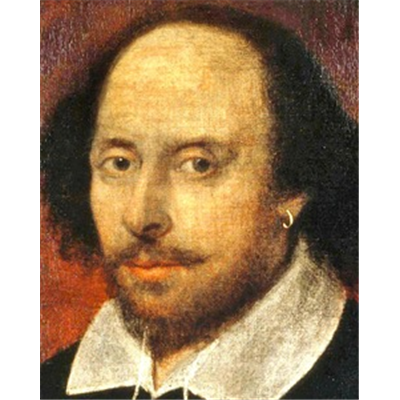 |
This is an interactive workshop examining Shakespeare's texts in more detail, looking for the clues that tell us why he is writing the way he is, and what he is telling the actors. It looks at the differences between prose and verse, how the iambic pentameter works, why he chooses the number of syllables, specific words and even specific letters! And then examines why it matters. Bringing decades of detailed textual work with actors and students to bear on the language we think we understand, this will give a deeper understanding of why the plays are written as they are, and change how you see and read Shakespeare.
Nick is a theatre director, actor and lecturer. He has directed at Shakespeare’s Globe, the Sam Wanamaker Theatre, Wilton’s Music Hall, St James’s Theatre, Cheltenham Everyman, the Aldeburgh Jubilee Hall, Folger Theatre in DC, Tmu- na Theatre in Tel Aviv, the McCoy Theater in Memphis and the American Shakespeare Center in Virginia. He is an Associate Drama Tutor at RADA, LAMDA and Shakespeare’s Globe, and has directed, lectured, and taught for the Royal Conservatoire of Scotland, the Dublin Lir Academy, BADA, Mountview, Rhodes College, Syracuse, Notre Dame, Case Western Reserve University and the NYU. As an actor he worked with the RSC, the National Theatre, the Globe Theatre, the BBC and ITV, and appeared in Miss Potter, 102 Dalmatians, and About A Boy. He lectures worldwide on Shakespeare, is a regular contributor to the National Symposium on Classical Education in Phoenix, Arizona, he had a paper published in Shakespeare Bulletin in 2014, and contributed to How and Why We Teach Shakespeare (Routledge) and Why The Theatre? ( Routledge).
Our lectures start at 8pm. Bar opens at 7pm. Non-members welcome - £15 on the door |
|
| Thursday, 08 July 2027 |
| Clubland: A Social History of Gentlemen's Clubs |
| Joanna Banham |
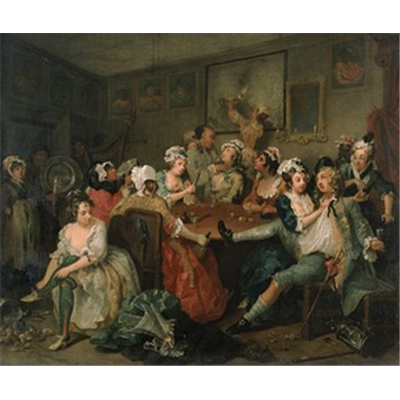 |
With its cigar smoke, leather armchairs and elderly men snoring, the Gentleman’s Club seems like an absurdly anachronistic institution today. But for over 250 years clubs were an indispensable part of elite men’s lives; spaces for gossip and dining, a refuge from wives, mistresses and creditors, and a place where they could cement important business contacts and class identities. Cubs were also a uniquely British phenomenon. The Brothers Goncourt famously declared that if two Englishmen were washed up on a desert island they would immediately form a club, and if a third came ashore they would instantly blackball him! This talk explores the history and customs of Lo
Jo Banham is a freelance curator, lecturer and writer. From 2006-2016 she was Head of Adult Learning at the Victoria & Albert Museum, and before that Head of Learning and Access at the National Portrait Gallery, and Head of Public Programmes at Tate Britain. She has also been Curator of Leighton House and Assistant Keeper at the Whitworth Art Gallery. She has published on many aspects of Victorian and early 20th century decoration and interiors. She recently curated an exhibition on William Morris and the Arts and Crafts Movement for the Juan March Fundacion in Madrid and the Museu Nacional d’Art Catalunya in Barcelona and she is currently writing a book on the History of Wallpaper. She is also Director of the Victorian Society Summer School.
Our lectures start at 8pm. Bar opens at 7pm. Non-members welcome - £15 on the door |
|
| Thursday, 16 September 2027 |
| The Hidden Wonders of Orkney |
| Elaine Hansen |
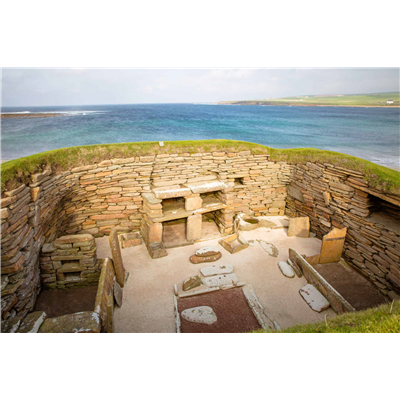 |
Orkney has a rich and unique history. The wonders uncovered from its ancient past, beginning over 7,000 years ago in Neolithic times, have earned Orkney World Heritage Site status because there was no other site like it in Ancient Britain. Hidden deep in Orkney are not just signs of its neolithic past. Orkney was invaded by Vikings in the 8th century AD, one of the first places they arrived in when they left Scandinavia. Orkney is a fascinating island from many perspectives, but in particular from the insights it has given us into the lives of two peoples living there more than 4,000 years apart.
Elaine Hansen has a Master’s degree in Education and taught for twenty-seven years. She now splits her year between Italy and Scotland. After taking early retirement she was free to pursue her passion, Art History, which she studied at the universities of Glasgow and Strathclyde. She became a guide at Kelvingrove Art Gallery, Glasgow in 2009 and gives lectures to her fellow guides. Several of her Scottish lectures are based on rooms in the Kelvingrove. In Italy Elaine researches her Italian lectures and in Glasgow attends seminars relating to her areas of expertise in Scottish Art. In 2018 she was awarded accreditation as a lecturer for The Arts Society and since then has been in demand for lectures delivered in the UK and Europe.
Our lectures start at 8pm. Bar opens at 7pm. Non-members welcome - £15 on the door |
|
| Thursday, 14 October 2027 |
| Dame Laura Knight |
| Rosalind Whyte |
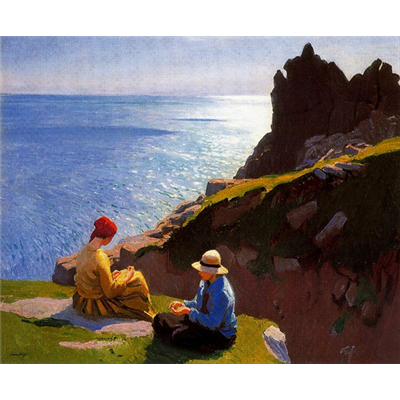 |
In 1936 Dame Laura Knight became the first woman to be elected as a full member of the Royal Academy in London, 168 years after its establishment. In her extraordinary career she painted landscapes, portraits and seascapes, as well as scenes from the circus, the ballet and the theatre. She was the only woman to be given War Commissions in both the First and Second World Wars and the only British artist to cover the Nuremberg Trials of 1946. This lecture provides an overview of her fascinating career and some of the remarkable achievements of her long life.
In 1936 Dame Laura Knight became the first woman to be elected as a full member of the Royal Academy in London, 168 years after its establishment. In her extraordinary career she painted landscapes, portraits and seascapes, as well as scenes from the circus, the ballet and the theatre. She was the only woman to be given War Commissions in both the First and Second World Wars and the only British artist to cover the Nuremberg Trials of 1946. This lecture provides an overview of her fascinating career and some of the remarkable achievements of her long life.
Our lectures start at 8pm. Bar opens at 7pm. Non-members welcome - £15 on the door |
|
| Thursday, 11 November 2027 |
| Miss Saigon: The Making of a Musical |
| Jamie Hayes |
 |
Jamie’s own personal journey as Associate Director on the original production of Miss Saigon in the West End and on Broadway. What does it take to bring an epic love story like Miss Saigon to the stage, capturing audiences for decades? How do creative minds transform raw ideas into a globally acclaimed musical? Get ready to dive into the behind-the-scenes magic that made this production one of Broadways most iconic. We journey through the making of Miss Saigon —inspired by Puccini’s Madame Butterfly, this powerful musical set against the tumultuous backdrop of 1970s Saigon is considered one of the most successful theatrical productions of all-time.
Jamie has directed many new opera productions, both at home and abroad. After training at RADA, he worked for Kent Opera, Glyndebourne Festival Opera, the BBC, Royal Shakespeare Company and English National Opera. He has directed many opera productions for leading UK festivals as well as all our most distinguished musical conservatoires. His new opera productions overseas have appeared as far away as Reykjavik, Malta and Melbourne. Jamie was Associate Director on the original production of the hit musical Miss Saigon in the West End and on Broadway. He was Director of Productions for British Youth Opera for over a decade, a company devoted to promoting the talents of our finest young opera singers in the UK.
Our lectures start at 8pm. Bar opens at 7pm. Non-members welcome - £15 on the door |
|